SUMMER LIMITED EDITION VAPES NOW AVAILABLE


China Top Strawberry Vape Manufacturers for Global Buyers?

China Top Strawberry Vape Manufacturers for Global Buyers?

The Strawberry Vape market is growing through distinctive flavors, compact devices, and increasingly detailed compliance expectations. Global buyers need more than attractive packaging. They need traceable ingredients, stable production, accurate labeling, and documented quality controls. A red strawberry image means little without evidence behind it.

Michael Siegel, a tobacco-control researcher, has stated, “Vaping is not harmless, but it is less harmful than smoking.” This reminder matters. Manufacturers should never present Strawberry Vape products as safe, healthy, or suitable for non-users. Responsible suppliers focus on legal adult markets, age restrictions, transparent specifications, and realistic product descriptions. Buyers must also check each destination’s rules before placing an order.

This guide reviews China-based manufacturers through a practical purchasing lens. It considers factory experience, flavor consistency, batch testing, device safety, packaging accuracy, export support, and responsiveness during sampling. A reliable factory should provide ingredient documentation, production records, test reports, and clear communication about minimum order quantities. Small details reveal capability: sealed sample cartons, readable batch codes, and strawberry flavor that remains consistent after storage. That sounds basic. It is not always basic.

The comparison cannot replace independent due diligence. Supplier websites may contain incomplete claims, outdated certifications, or polished photographs without production evidence. Buyers should request samples, verify certificates, inspect facilities when possible, and use written quality agreements. Some manufacturers will impress quickly, then disappoint during scale-up. That risk deserves attention. A strong partnership develops through repeated testing, honest feedback, and measurable standards—not promises alone.
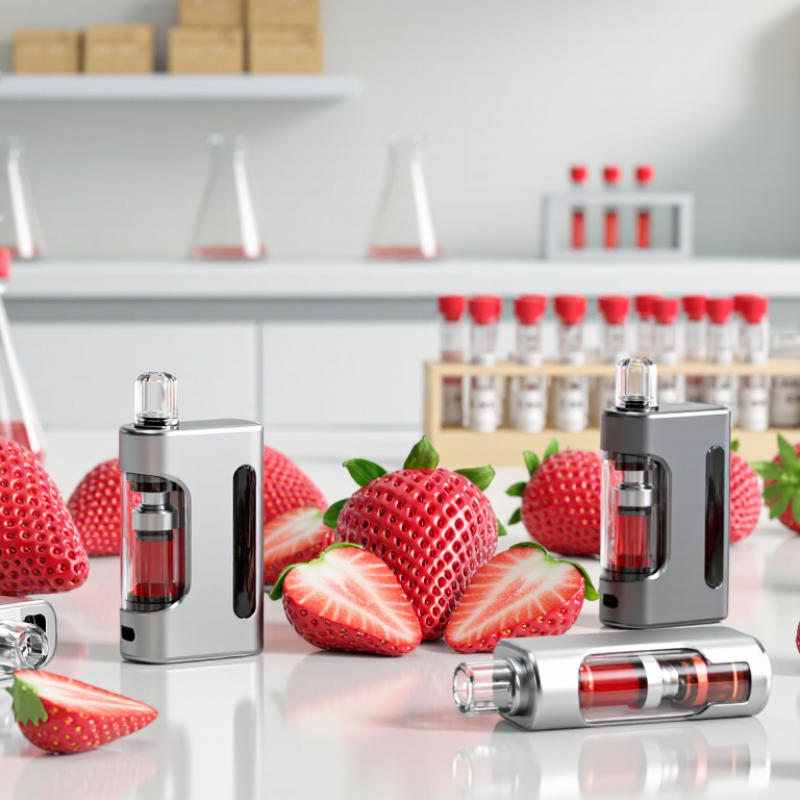
China Top Strawberry Vape Manufacturers for Global Buyers?

Strawberry Vape Manufacturing in China: Products, Standards, and Market Scope

China Top Strawberry Vape Manufacturers for Global Buyers?

Strawberry Vape Manufacturing in China: Products, Standards, and Market Scope

China’s strawberry vape manufacturing sector serves regulated markets through OEM and ODM production. Common products include disposable devices, refillable pods, and nicotine-free formats where permitted. Strawberry profiles may use fruit, cream, or cooling notes. Each variation requires controlled flavor development and stability testing.

Reliable factories should provide ingredient records, batch numbers, laboratory reports, and production traceability. Their facilities may follow ISO-based quality systems, while independent laboratories can test emissions, metals, nicotine levels, and leakage performance. Buyers should also check electrical safety, packaging rules, recycling duties, and age-restriction requirements in each destination market. One certificate rarely covers every country.

Practical evaluation starts with a factory visit or a documented remote audit. Inspect filling rooms, storage temperatures, sampling procedures, and rejected-unit records. A sample may taste excellent but still show weak battery consistency. That detail matters. Manufacturing teams should explain minimum order quantities, lead times, mold ownership, and post-production support clearly. Some suppliers communicate well before payment, then respond slowly after revisions. This is an uncomfortable but common risk. Buyers should compare test data with finished samples, not trust attractive presentations alone. Market scope remains uneven because flavored vape rules, import controls, and permitted nicotine categories differ widely.񎟙

China’s strawberry vape manufacturing scope is shaped by national regulation rather than brand-specific data. Online sales of e-cigarettes in China were prohibited in 2019, while the mandatory national e-cigarette standard GB 41700-2022 and related regulatory measures took effect in 2022. Manufacturers supplying domestic or export buyers should verify product classification, ingredient documentation, quality controls, and destination-market requirements.

How to Evaluate China-Based Strawberry Vape Manufacturers

Choosing China-based strawberry vape manufacturers requires more than comparing prices. A reliable supplier should provide verifiable business registration, production permissions, and current quality certificates. Ask for batch records, ingredient specifications, and laboratory reports from independent facilities. Strawberry flavoring should have clear composition details, not vague “natural taste” claims. Check whether the product meets the destination market’s rules, including age restrictions, packaging requirements, labeling, and nicotine controls.

Tips: Request samples from different production dates. Compare flavor consistency, seal quality, liquid appearance, and printed information. Visit the factory if possible, or hire an independent auditor. Inspect clean-room controls, storage conditions, filling equipment, and traceability systems. Ask how defective batches are isolated and recalled. A polished video is not proof. I learned that paperwork can look complete while practical controls remain weak. Verify certificate numbers directly with the issuing organization, and record every promise in the purchase agreement.

Evaluate communication as carefully as manufacturing. A professional supplier should answer technical questions clearly and disclose minimum order quantities, lead times, testing costs, and shipping documents. Avoid suppliers that encourage unapproved health claims or youth-focused designs. Their sales language may sound confident, but evidence matters more. One imperfect detail deserves attention: minor label errors can become expensive border delays. Use a written approval process for artwork, formulas, samples, and final batches. Keep independent test results before accepting large shipments.

Key Certifications and Quality Controls for Global Buyers

China Top Strawberry Vape Manufacturers for Global Buyers?

For global buyers, certification should be verified, not merely displayed. A reliable manufacturer should provide an active ISO 9001 certificate, an audited quality system, and traceable production records. Battery-powered devices also require safety evidence based on standards such as IEC 62133-2 and UN 38.3 transport testing. These documents should match the actual factory, model, and production scope. A certificate with a different company address is a warning sign.

Quality control must cover the strawberry formulation, device, and packaging. Request lot-specific certificates of analysis showing nicotine strength, heavy metals, residual solvents, and microbial results. Independent laboratory testing adds credibility.

The U.S. FDA’s 2024 National Youth Tobacco Survey reported 1.63 million current student e-cigarette users, with 87.6% using flavored products. That figure makes flavor compliance and age-restricted marketing especially important.

Packaging should carry accurate ingredients, batch numbers, warnings, and local-language information where required.

Do not rely on taste samples alone. Check fill-volume accuracy, leakage testing, charging protection, and shelf-life data. Ask for corrective-action records when failures occur. Imperfect results happen; hidden results are worse.

Buyers should also confirm RoHS, REACH, and recycling obligations for each destination. Requirements differ between markets, and one certificate rarely proves full compliance.

Private Label, OEM, and Packaging Options for Strawberry Vape Products

China Top Strawberry Vape Manufacturers for Global Buyers?

Reliable strawberry vape manufacturing begins with compliance, not flavor alone.

Experienced factories should explain their production controls, ingredient sourcing, and testing process clearly. Buyers should request batch records, laboratory reports, and transport documents before placing large orders. Products must meet the destination market’s rules, including age restrictions, labeling, emissions limits, and packaging requirements. Requirements differ widely.

Private label programs allow buyers to customize the product identity without managing every production stage.

A manufacturer may support flavor development, device selection, label artwork, and carton design. For strawberry profiles, teams can compare fresh fruit, jam, or lightly chilled notes through controlled samples. Small pilot batches reduce waste. They also reveal problems that digital mockups hide, such as weak aroma or leaking units.

OEM production offers deeper control over hardware, liquid specifications, and user instructions.

Packaging can include child-resistant features where required, tamper evidence, recycling information, and multilingual labels. Matte cartons feel premium, while compact boxes lower shipping volume. Color accuracy matters too; strawberry red can appear different under warehouse lighting. That detail is easy to overlook.

A dependable supplier should provide realistic lead times and explain quality checkpoints.

Ask about incoming-material inspection, filling accuracy, seal testing, and final sampling. Do not accept vague promises. Some sample rounds may still need revision, especially when sweetness changes during storage. Careful buyers document every approved detail before mass production.

Export Logistics, Compliance, and Supplier Due Diligence

Choosing a China-based strawberry vape manufacturer requires more than reviewing flavor catalogs. Global buyers need documented logistics, lawful market access, and verifiable production controls. UNCTAD reports that over 80% of world merchandise trade by volume moves by sea. Therefore, port selection, container protection, and seasonal shipping delays deserve early attention. Strawberry flavorings should remain sealed, lot-coded, and protected from heat during transit.

Compliance changes by destination. The European Union’s Tobacco Products Directive limits nicotine concentration to 20 mg/ml and tank capacity to 2 ml. Buyers should verify notification records, packaging language, health warnings, and child-resistant closures. In the United States, products require the applicable federal marketing authorization before lawful sale. WHO reports that more than 80 countries still lack comprehensive e-cigarette regulation, but that gap does not remove buyer responsibility. Rules can change quickly.

Supplier due diligence should include a factory video audit, business-license checks, ISO/IEC 17025 laboratory reports, and batch-level certificates of analysis. Test results should cover nicotine accuracy, heavy metals, solvents, and emissions. Ask for recall procedures and traceability from filling room to carton. Confirm HS codes, Incoterms, cargo insurance, and customs documents before payment. I would not rely on a polished website alone. One weakness remains: remote audits can miss subcontracted production. An independent pre-shipment inspection adds cost, but it may expose problems before a container leaves the port.

China Top Strawberry Vape Manufacturers for Global Buyers? - Export Logistics, Compliance, and Supplier Due Diligence

Evaluation Dimension Buyer Data Point Minimum Evidence to Request Practical Acceptance Benchmark Primary Risk Indicator
Manufacturer Identity Legal entity, registered address, production address, and export authorization Business registration, factory address verification, export documentation, and authorized signatory details All legal names and addresses match across contracts, invoices, bank details, and certificates Different names on quotation, payment account, packing list, and certificate
Product Format Disposable, closed-pod, refillable, or bottled e-liquid strawberry product Technical specification sheet, product drawings, ingredient list, and sample units The declared format, liquid volume, nicotine strength, battery type, and packaging are consistent Product configuration changes after quotation or differs between sample and mass production
Nicotine Control Declared nicotine concentration, nicotine source, batch number, and tolerance range Independent laboratory test report, certificate of analysis, and batch-release procedure Measured concentration is within the destination market’s legal limit and the approved product specification Missing batch records, unexplained test variation, or undeclared nicotine
Strawberry Flavor Safety Flavoring substances, sweeteners, cooling agents, and inhalation-use suitability Full ingredient disclosure, safety data sheets, allergen statement, and applicable toxicology documentation No prohibited substance is present under the destination market’s rules; flavor ingredients are traceable “Food grade” is presented as the only inhalation-safety evidence
EU Market Compliance Tobacco Products Directive requirements and national implementation rules Notification records, ingredient information, emissions data, packaging artwork, and health-warning review Nicotine liquid generally does not exceed 20 mg/ml; tanks generally do not exceed 2 ml; refill containers generally do not exceed 10 ml Supplier treats one notification as valid for every EU country without checking national rules
United Kingdom Compliance Product notification, packaging, labeling, and advertising requirements Notification confirmation, compliant artwork, ingredient list, emissions information, and responsible-person details Nicotine strength, container volume, warnings, and child-resistant features comply with applicable UK rules Packaging is copied from another market without a UK-specific legal review
United States Compliance Federal tobacco-product authorization status and state-level requirements Written regulatory assessment, authorization evidence where applicable, state tax review, and age-restriction plan No product is marketed as legally saleable without confirming applicable federal, state, and local requirements Supplier claims that shipment clearance alone proves authorization to sell
Canada Compliance Federal nicotine concentration, packaging, labeling, and provincial restrictions Concentration test report, bilingual label review where required, ingredient disclosure, and provincial compliance check Nicotine concentration does not exceed the Canadian federal maximum of 66 mg/ml unless rules change or an exemption applies Federal compliance is assumed to cover all provincial tax and retail requirements
Australia Compliance Therapeutic-goods, prescription, import, and state or territory controls Current import assessment, product classification, prescription pathway review, and local legal advice Import and supply route is approved before shipment; nicotine products are not treated as ordinary consumer goods Supplier relies only on a commercial invoice and does not check current Australian requirements
Battery and Electrical Safety Battery chemistry, capacity, protection circuit, charging method, and transport classification UN 38.3 test summary, battery specification, safety data, and applicable electrical test reports Battery documents match the exact cell and finished product configuration Generic battery certificates are supplied for a different capacity or model
Dangerous-Goods Shipping Nicotine liquid classification, lithium-battery status, packing method, and carrier acceptance Safety data sheet, shipper’s declaration where required, packing instruction, and carrier confirmation The freight forwarder confirms the route before cargo is booked; air shipments follow applicable dangerous-goods rules Supplier proposes under-declaration, vague descriptions, or ordinary-post shipment without approval
HS Classification and Customs Product classification, customs value, origin, duties, excise, and import restrictions Draft commercial invoice, packing list, origin information, tariff ruling if available, and broker review Importer and customs broker approve the classification before the first commercial shipment Supplier promises “tax-free” clearance or instructs the buyer to use an inaccurate HS code
Packaging and Labeling Child resistance, tamper evidence, leak prevention, warnings, language, and recycling marks Final artwork, packaging test report, label translation, and pre-production approval sample Artwork is approved for the specific destination market before mass production Labels are changed after production or contain unsupported health and performance claims
Quality Management Incoming-material control, mixing records, filling accuracy, leak rate, and final inspection Quality manual, batch records, inspection checklist, corrective-action procedure, and retention samples Every production lot is traceable from raw material to shipment carton No lot code, no retained sample, or no written process for defective goods
Independent Inspection Pre-production, during-production, and pre-shipment verification Inspection scope, sampling plan, photographs, test results, and signed non-conformity report Inspection is performed against the approved golden sample and signed specification Factory refuses independent inspection or only provides factory-selected photographs
Production Capacity Monthly output, filling lines, assembly capacity, peak-season availability, and minimum order quantity Capacity statement, equipment list, recent anonymized production records, and confirmed production schedule Capacity is supported by equipment, staffing, quality controls, and a realistic lead-time plan Very large output claims with limited equipment or no documented production planning
Lead-Time Planning Sampling, artwork approval, component procurement, production, inspection, and freight booking Milestone schedule with responsible party and delay-escalation process The plan separates product production time from customs and transport time Supplier gives one delivery date without accounting for compliance review or dangerous-goods booking
Incoterms and Payment EXW, FOB, CIF, or DAP responsibility, payment milestones, inspection holdback, and refund terms Proforma invoice, signed sales contract, bank-account verification, and dispute-resolution clause Payment account belongs to the contracted legal entity and final balance is linked to inspection approval Urgent payment to a personal account or a last-minute bank-detail change by email
Traceability and Recall Lot coding, complaint handling, recall authority, and customer notification process Traceability procedure, sample recall exercise, complaint log template, and contact escalation list A finished unit can be linked to its liquid batch, components, production date, and shipment record Supplier cannot identify affected lots or provide a written recall procedure
Environmental Obligations Battery recycling, electrical-waste obligations, packaging waste, and extended producer responsibility Destination-market registration assessment, recycling labels, material declaration, and waste-management plan Importer understands and budgets for market-specific environmental obligations before launch Supplier treats batteries and disposable devices as ordinary plastic packaging only
Overall Supplier Decision Compliance readiness, manufacturing reliability, logistics capability, and commercial transparency Completed due-diligence file, sample approval, independent inspection, and destination-market legal review Proceed only when product, supplier, shipment, and market-sale requirements are documented and internally consistent Low price is used to compensate for missing regulatory, quality, or logistics evidence
Buyer note: Regulatory limits, notification procedures, taxes, environmental obligations, and carrier policies can change by destination and product configuration. Confirm current requirements with the destination-market regulator, customs broker, dangerous-goods forwarder, and qualified legal adviser before placing a commercial order.