SUMMER LIMITED EDITION VAPES NOW AVAILABLE

Who Are the Top Yoga Tops Manufacturers in China?

Yoga has moved from studio practice into everyday wardrobes, raising expectations for comfort, fit, and durability. Grand View Research estimated the global yoga clothing market at USD 31.3 billion in 2022 and projected an 8.4% compound annual growth rate from 2023 to 2030. The figure signals opportunity, but it does not guarantee that every supplier can meet a brand’s needs.

For buyers, Yoga Tops are a useful test of a manufacturer’s capabilities. A sample reveals how fabric stretches and recovers, whether seams stay flat, and how straps feel during movement. Ask about fabric composition, color consistency, size grading, minimum order quantities, and production lead times. Small details matter. A soft hand feel can impress at first, yet poor recovery may leave a top loose after repeated wear.

China offers a broad network of apparel factories and textile suppliers, but “top” depends on the project. Some manufacturers specialize in technical fabrics; others focus on flexible sampling or larger production runs. This guide compares manufacturers using practical criteria, including product expertise, quality-control processes, customization, and communication. Treat published claims as starting points, not proof. Request recent samples and verify specifications before placing an order. Rankings can simplify a complex market, but they may miss the best-fit partner for a smaller brand.
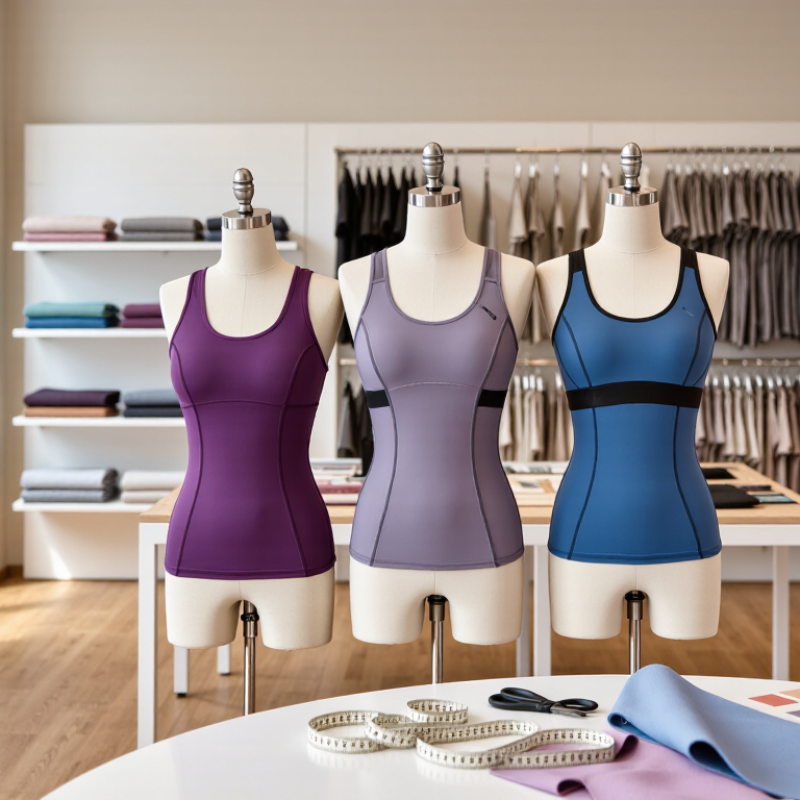
Who Are the Top Yoga Tops Manufacturers in China?

What Defines a Leading Yoga Tops Manufacturer in China?

A leading yoga tops manufacturer in China proves performance with repeatable tests, not polished product photos. Ask for fabric weight, stretch recovery, pilling results, and colorfastness records. During wear trials, check whether a bra band rolls after repeated bends and whether seams rub under the arms. Small details matter. No factory is flawless.

Market growth makes dependable production more important. Grand View Research estimated the global yoga clothing market at US$32.54 billion in 2023, forecasting a 9.4% compound annual growth rate from 2024 to 2030. A capable supplier should explain how it controls fit across sizes, tracks sample revisions, and keeps bulk fabric consistent with approved swatches. The explanation should be specific, not merely reassuring.

Material traceability also deserves scrutiny. Textile Exchange’s Materials Market Report 2024 estimated global fiber production at 124 million tonnes in 2023, with polyester representing 57%. Ask manufacturers to identify fiber content and provide supporting documents for recycled-material claims. A clear answer is useful; a perfect-sounding answer without evidence is not. I would still verify production records independently, because paperwork and factory practice can diverge.

Key Criteria for Comparing Chinese Yoga Tops Suppliers

Who Are the Top Yoga Tops Manufacturers in China?

Key Criteria for Comparing Chinese Yoga Tops Suppliers

A strong supplier should explain fabric composition, stretch recovery, opacity, and moisture management in clear terms. Ask for a sample in the exact fabric and color you plan to order. Test it during movement, then wash it several times. Watch for fading, pilling, loose seams, or a stretched-out neckline.

Fit matters. Request a size chart with garment measurements, not just general labels such as small or medium. Compare measurements across several sizes and ask how grading is checked during production. A polished catalog can still hide inconsistent sizing. That is easy to overlook.

Check how the supplier handles quality control and production changes. Ask whether inspections cover stitching, elastic tension, and logo placement, and request written records where available. Confirm minimum order quantities, sample fees, lead times, and how delays are communicated. Clear answers are useful; vague promises are not.

Communication deserves a practical test. Send a specific question about fabric weight or a seam detail, then note how accurately and promptly the supplier responds. Ask for relevant factory documentation and references you can verify. No single certificate proves every order will be consistent, so compare documents with sample quality and production procedures.

Notable Yoga Tops Manufacturers and Their Specialties

Chinese yoga-top manufacturers often specialize by fabric, construction, or order flexibility. Some focus on seamless knitting, producing smooth tops with fewer side seams and less rubbing during twists. Others excel at cut-and-sew styles, where mesh panels, shelf bras, and adjustable straps can be specified more precisely. Small details matter. Ask for stretch-recovery and wash-test results, not just a soft hand feel.

Material choices shape both comfort and sourcing. Textile Exchange’s Materials Market Report 2024 estimates global fiber production reached 124 million tonnes in 2023, with polyester accounting for about 57%. For buyers, recycled polyester and nylon blends are common options, but recycled content alone does not prove a garment will last. Request fabric composition, weight, colorfastness results, and sample measurements. A sample can fit well on a hanger yet ride up during a deep lunge.

Manufacturers also differ in development support. Some provide pattern adjustments and custom labels; others prioritize stable repeat orders and simpler styles. Allied Market Research estimated the yoga clothing market at $27.6 billion in 2021 and projected $70.9 billion by 2031. Market estimates depend on category definitions, so treat them as direction, not a guarantee. Clear tech packs help. Still, even a detailed brief may miss how a waistband feels after an hour of movement.

Who Are the Top Yoga Tops Manufacturers in China? – Notable Yoga Tops Manufacturers and Their Specialties

How to read this table: This is a practical comparison of common China-based manufacturing specializations, not a verified company ranking. Capabilities vary by factory and should be confirmed through samples, audits, and written specifications.

Manufacturer Type Typical Yoga Top Specialty Common Construction Capabilities Materials Often Requested Best Fit For Details to Verify
Performance-Knit Apparel Manufacturer Sports bras, compression tops, and fitted training tanks Stretch sewing, elastic insertion, flat seams, and fit sampling Polyester-elastane and nylon-elastane knits Brands seeking moisture-managing, close-fitting styles for studio and fitness use Fabric recovery, opacity during stretch, seam comfort, and size consistency
Seamless-Knit Producer Seamless bras, cropped tops, and body-hugging base layers Circular knitting and localized knit structures, subject to machine setup Nylon or polyester blended with elastane Projects prioritizing fewer garment seams and a smooth next-to-skin feel Available machine dimensions, achievable design details, grading, and sample approval
Cut-and-Sew Activewear Factory Wrap tops, longline bras, layered tanks, and multi-panel designs Pattern development, fabric cutting, overlock stitching, coverstitching, and binding Stretch jersey, rib knit, and other apparel knits selected for the design Custom silhouettes, varied panel layouts, and collections with multiple design details Pattern ownership, stitch specifications, production tolerances, and pre-production samples
Low-Impact or Natural-Fiber Apparel Specialist Soft yoga tanks and relaxed-fit tops using natural or recycled-content fabrics Cut-and-sew production, fabric sourcing, and labeling support when available Cotton blends, recycled polyester blends, and other buyer-specified knits Collections focused on a particular fiber story or softer everyday wear Fiber-content documentation, certification scope, shrinkage, and colorfastness
OEM / Private-Label Activewear Manufacturer Buyer-designed yoga tops produced to supplied specifications Sampling, label and packaging application, and production against approved tech packs Materials chosen from the buyer's specification or factory sourcing options Businesses that already have designs, artwork, and product requirements prepared Minimum order quantity, sample charges, lead time, quality checks, and subcontracting policy
ODM Activewear Manufacturer Adaptable existing styles, including bras, tanks, and coordinated sets Style customization such as color, trims, logos, and selected pattern adjustments Available in-house or sourced fabrics, depending on the chosen style Buyers looking to develop a collection from an existing product base Design rights, permitted modifications, fabric availability, and repeat-order consistency

Materials, Production Standards, and Customization Options

Choosing a yoga-top manufacturer in China starts with the fabric, not the color card.

Nylon-spandex blends feel smooth and recover well after stretching; recycled polyester can suit buyers seeking another fiber option. Ask for fabric weight, fiber composition, and test results for shrinkage, colorfastness, and stretch recovery. A swatch should be checked after washing, not just under showroom lights. Small detail, big difference.

Production standards matter just as much.
Request a sample and inspect the seam allowance, elastic tension, lining coverage, and stitching around straps. Reliable factories should explain their inspection steps, keep batch records, and flag defects before shipment. Ask how they verify fabric lots and measure finished garments. Customization may include cup construction, necklines, strap widths, labels, colors, and size grading. Share a clear measurement chart and artwork files, then approve a pre-production sample.

One point buyers sometimes overlook: a polished sample does not guarantee every bulk piece will match it.

Tips: Compare samples after movement and washing. Ask for written tolerances on measurements and color. Start with a modest order if communication or quality checks still feel uncertain. It is easy to rush this part.

How to Evaluate and Select a Yoga Tops Manufacturer

Choosing a yoga tops manufacturer in China takes more than comparing unit prices. Ask how the factory handles fabric sourcing, pattern grading, sewing, and final inspection. Request a sample in your intended fabric and size range. Check stretch recovery, seam comfort, and whether the neckline stays in place during movement. Feel the fabric after washing, too; a soft first impression can change.

A sample can look excellent on a hanger and still twist after repeated wear. Test it with a few real movements, such as a deep stretch and a forward fold. Ask for clear details on minimum order quantities, sample timelines, production capacity, and how defects are recorded. A detailed answer is useful, but verify it against the sample and written specifications. No factory is perfect, and vague communication early on may become a bigger problem later.

Tips: Photograph stitching and measurements, then compare them with the approved sample. Ask who checks each production batch and what happens when measurements fall outside tolerance. Feel the fabric. If possible, wash and wear the sample more than once before approving bulk production. Small details matter.

Article Source: