Top LED Linear Modules for Commercial Lighting
Commercial lighting decisions are rarely made by comparing wattage alone. A corridor may need even, low-glare light; a retail counter may need accurate color and tighter beam control. The LED linear module sits at the center of these choices, but performance depends on its driver, optics, thermal design, and compatibility with the fixture. Small details matter.
The International Energy Agency has estimated that lighting accounts for about 15% of global electricity use. The U.S. Department of Energy reports that LED products use at least 75% less energy than incandescent lighting, though that comparison does not predict savings against every existing commercial system. For buyers, the useful question is narrower: how much light reaches the work surface, and how consistently does it perform over time? Lumens per watt, color consistency, dimming behavior, service access, and documented lifetime claims deserve close review. A datasheet cannot tell the whole story.
Former U.S. Department of Energy lighting program manager James Brodrick has emphasized evaluating lighting as a system; paraphrased, the practical advice is to assess the complete luminaire, not just its LED source. That distinction matters when comparing linear modules for offices, warehouses, and retail spaces. A high-efficiency board can still disappoint if heat builds up or the driver flickers at low dimming levels. No single module suits every ceiling. This guide compares leading options through specifications and real installation considerations, while recognizing that product data and field results do not always align perfectly. That gap deserves attention.
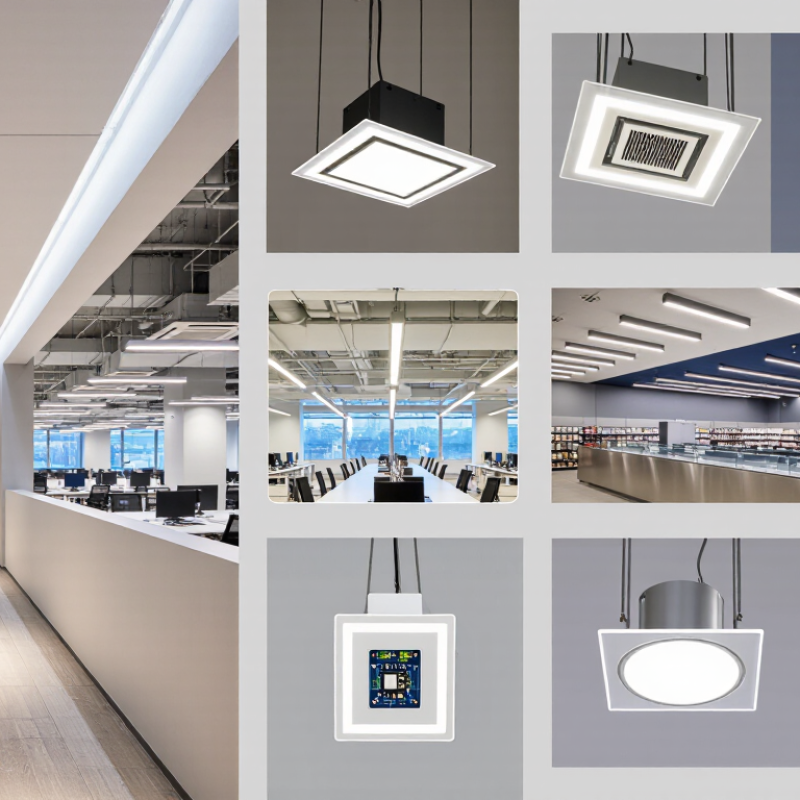
What LED Linear Modules Are and How They Work
LED linear modules are compact assemblies of light-emitting diodes mounted in a straight row on a circuit board. They sit inside luminaires such as office troffers, shop lights, and suspended ceiling fixtures. A module usually includes the LED board and may include lenses or reflectors to shape the beam. It is not always a complete light: a compatible driver supplies controlled electrical current, while the fixture provides housing and heat management. A simple distinction, but one that is easy to overlook.
When powered, the LEDs convert electrical energy into light and heat. The board conducts heat toward the fixture, so material, mounting contact, and airflow can affect operating temperature and service life. In a real installation, a loose screw or uneven contact can matter. The driver also needs to match the module’s voltage or current requirements; check its specifications rather than relying on connector fit. Optics influence whether light spreads across a work surface or creates brighter spots. For commercial projects, compare lumen output, color temperature, color rendering, and photometric data for the actual module and fixture combination. I would not assume that every linear module will behave alike. Measurements and installation conditions still matter.
Top LED Linear Modules for Commercial Lighting: What They Are and How They Work
LED linear modules are elongated circuit boards carrying multiple LEDs, often paired with optics and a suitable driver. The driver supplies controlled electrical power, and the LEDs convert some of it into light. This example shows the electrical relationship for a 24 V constant-voltage module: power equals voltage multiplied by current. Values are calculated examples, not specifications for a particular product; real modules may differ and driver losses are not included.
Main Types and Configurations for Commercial Lighting
Commercial lighting uses several LED linear module configurations, each suited to different fixture shapes and light patterns. Rigid, board-based modules fit straight channels in offices, shops, and corridors. Flexible modules bend around shallow curves, though tight bends can stress conductors and shorten service life. Integrated linear light engines combine LEDs and supporting components into a compact assembly. They can simplify fixture design, but replacement may require changing a larger section.
Module length, LED spacing, and output shape affect the finished light. Closely spaced LEDs can reduce visible gaps behind a diffuser. Wider spacing may create uneven bands, especially with a shallow lens. A continuous row works well over counters or workstations, while separate segments can suit display cases and irregular ceilings.
Small details matter. Check the driver’s electrical ratings and dimming compatibility, then confirm that the housing can manage heat.
Heat has consequences.
A configuration that looks efficient on paper may perform differently in a warm, enclosed fixture. Sample testing helps reveal glare, dark spots, and color differences before a full installation.
Key Performance Features and Specifications
A commercial LED linear module should be judged by how it performs inside the intended fixture, not by wattage alone. Check luminous efficacy, measured in lumens per watt, alongside total light output. A 4,000-lumen module may suit a corridor, while a high-ceiling workspace often needs more output or carefully spaced fixtures. Match correlated color temperature to the task: 3,000K gives a warmer appearance, while 4,000K is common in offices and retail areas. Look for a color rendering index of 80 or higher for general use; detailed product displays may benefit from stronger color fidelity. Small differences matter.
Thermal performance affects both light output and service life. Review the module’s stated operating temperature and test conditions, then consider airflow inside the actual housing. A compact aluminum channel can help move heat away from the LEDs. Check driver compatibility, dimming method, and flicker data before installation, especially where cameras or sensitive tasks are involved. For long operating hours, compare lifetime ratings and their maintenance assumptions, rather than treating a single lifetime figure as a guarantee. Also verify dimensions, mounting points, and ingress protection for dusty or damp locations. One caveat: published figures rarely capture every fixture’s real-world conditions. A sample installed in the intended housing can reveal issues that a datasheet misses.
How to Select and Maintain LED Linear Modules
Top LED Linear Modules for Commercial Lighting
How to Select and Maintain LED Linear Modules
For offices, corridors, and retail aisles, choose a module by light output, not wattage alone. Check lumens, color temperature, color-rendering index, and beam distribution against the task. Neutral white light around 3500 K can suit shared work areas, while high-CRI light helps colors appear more faithful. Confirm the driver’s dimming protocol, input voltage, thermal limits, and physical fit before ordering. Review photometric files and warranty terms, too. A bright sample on a bench can look very different across a long ceiling.
Maintenance starts with safe access and a documented inspection schedule. Dust on lenses and heat sinks traps warmth and can reduce useful output. Check for loose connectors, discoloration, flicker, and blocked ventilation. Replace damaged parts only with electrically compatible components. The U.S. Department of Energy’s Energy Saver guidance says LEDs use at least 75% less energy and last up to 25 times longer than incandescent lighting. Treat these figures as a benchmark, not a guarantee: heat, driver quality, switching, and operating hours affect service life. Record failures by location; patterns may reveal poor airflow or a mismatched driver.
Tips: Keep a compatible spare driver, photograph wiring before service, and clean lenses with a soft, dry cloth. Don’t overtighten clips. Uneven light can follow.