China Top 10 Crystal Singing Bowl Manufacturers?
Interest in sound-based wellness has grown alongside the wider wellness economy. The Global Wellness Institute’s Global Wellness Economy Monitor 2024 estimated that the sector reached $6.3 trillion in 2023. It projected growth to nearly $9 trillion by 2028. These figures describe the broader economy, not Crystal Singing Bowl sales. That distinction matters. Buyers still need evidence about the product itself.
This guide examines ten China-based suppliers associated with Crystal Singing Bowl production. It considers practical signals: factory transparency, material descriptions, tuning options, quality checks, customization, and export experience. Details matter. A polished catalogue alone cannot confirm who makes each bowl or how consistently it is produced. Some suppliers may be manufacturers, while others may act as trading companies; public information does not always make that clear. The selection should therefore be treated as a research starting point, not a definitive ranking. Compare specifications, request current product details, and verify claims directly before making a purchasing decision. A clear tone is appealing, but dependable sourcing requires more than sound.
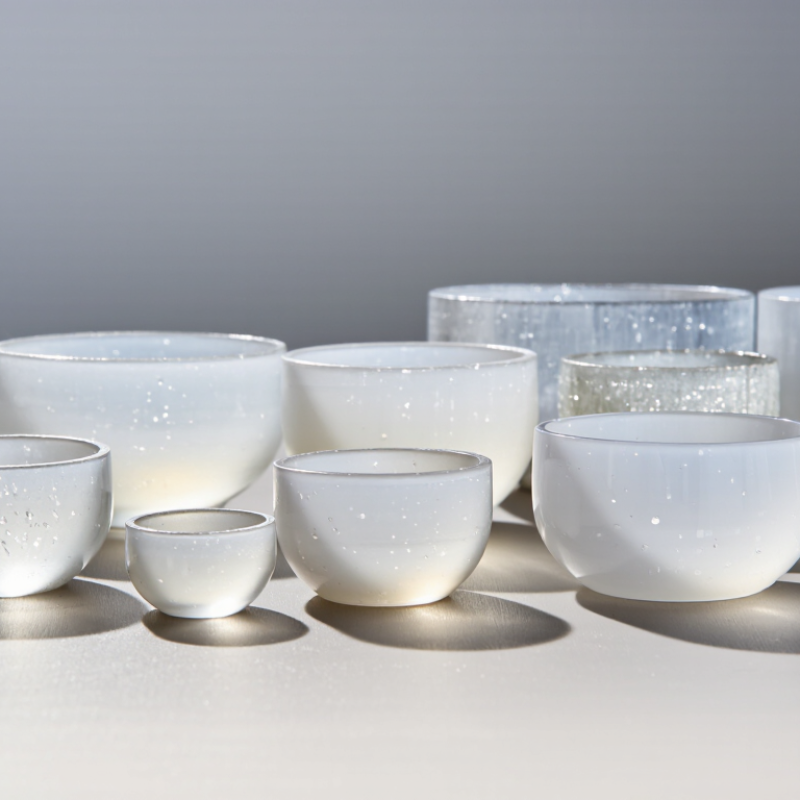
Crystal Singing Bowls in China: Materials, Types, and Industry Standards
Crystal singing bowls made in China are commonly formed from high-purity quartz glass, often called fused silica. The material can withstand high heat and produces a clear, lasting ring when shaped and finished well. Not all bowls sound alike. Wall thickness, diameter, and rim shape affect pitch, sustain, and vibration. A small difference in thickness can change the feel of a note under a suede-wrapped mallet.
Common types include clear bowls, frosted bowls, and bowls tuned to particular pitches. Clear surfaces show small bubbles or marks more readily; frosted finishes can make those details harder to inspect. Buyers should ask how makers check dimensions, surface defects, tuning, and sound consistency between samples. There is no single specification that guarantees a pleasing tone. Sound judgment still matters. Industry standards may cover material quality and production controls, but requirements can vary by supplier and intended use. Requesting a written inspection record is sensible. It is not a perfect safeguard, though. A bowl can pass visual checks and still sound uneven in a room with hard walls.
China Crystal Singing Bowl Materials: Thermal Expansion
Representative linear thermal expansion coefficients for silica materials, relevant to material selection and thermal processing.
Fused silica has a low coefficient of thermal expansion, while crystalline quartz expands differently and is direction-dependent. Values are representative material references—not product specifications or certification requirements for singing bowls.
How to Assess the Top 10 Manufacturers: ISO 9001:2015 and Export Data
China Top 10 Crystal Singing Bowl Manufacturers?
How to Assess the Top 10 Manufacturers: ISO 9001:2015 and Export Data
When comparing manufacturers, treat ISO 9001:2015 as evidence of a quality management system, not proof that every bowl will sound or finish perfectly. Ask for the certificate number, validity dates, certified site, and scope. Confirm these details with the issuing certification body. The factory address should match the site producing your order. Details matter.
Then inspect how the system works in practice. Request recent inspection records for bowl dimensions, surface defects, packaging, and sound consistency. Ask how staff handle a chipped rim or a bowl that differs from the approved sample. A polished certificate is reassuring, but it cannot answer every production question. That gap deserves attention.
Export data can help test a supplier’s experience. Look for repeated shipments of comparable products, consistent shipment timing, and evidence of serving your intended market. Trade databases may omit records or use broad product descriptions, so treat them as clues, not a final verdict. Ask the manufacturer to explain unusual gaps or sharp changes in shipment volume. Compare those explanations with sample quality, lead times, and packing details. Some records are imperfect. Your assessment may be, too.
Manufacturer Profiles: Locations, Product Ranges, Customization, and MOQ
A practical review of China’s top crystal singing bowl manufacturers should compare factory locations, product ranges, customization, and minimum order quantities. Supplier addresses may cover different manufacturing regions, so confirm whether the listed site is a workshop, showroom, or trading office. That detail matters.
Product ranges can include bowls in several diameters, tones, finishes, and rim styles. Ask for a current size chart and clear photos beside a ruler. Small details count. Custom options may include color, engraving, packaging, or matched sets, but not every workshop can control tone consistently across a large order. Request a sample and agree on inspection criteria before production.
MOQ varies with bowl size, finish, and packaging. Stock designs may allow smaller trial orders, while custom colors or etched designs can require more units. Get the MOQ in writing, along with sample costs, lead time, and rules for mixed sizes. Comparisons are imperfect: some suppliers publish flexible minimums but apply them only to selected models. A careful buyer should verify each claim directly and keep the replies for reference.
Technical Comparison: Quartz Purity, Bowl Dimensions, Frequency, and Tuning
China Top 10 Crystal Singing Bowl Manufacturers?
A technical comparison should start with material records, not marketing language. Ask each manufacturer how quartz purity is measured and whether results apply to the finished bowl. High purity can support a clear, sustained tone, but it does not guarantee better sound. Shape, wall thickness, and finishing also matter. Request a sample or a recording made in a quiet room.
Compare dimensions alongside frequency. Record each bowl’s diameter, height, and weight, then note its measured pitch. Larger bowls often produce lower tones, but dimensions alone cannot predict the exact frequency. Ask how tuning is checked, what tolerance is accepted, and whether measurements are taken after final polishing. A useful comparison uses the same measuring method across suppliers. Even then, room acoustics and striking technique can change what listeners hear. That part is easy to overlook.
Tips: Tap gently with the same mallet, then compare sustain and pitch in the same room. Keep the test brief and record the results. A specification sheet may look precise, yet I would still verify a few samples; production variation is possible, and a perfect chart is not proof of consistent sound.
Buyer Checks: Test Reports, Lead Times, Pricing, and Warranty Terms
When comparing China’s top 10 crystal singing bowl manufacturers, treat rankings as a shortlist, not proof of quality. Ask for recent test reports tied to the quoted bowl material and production batch. Check the report date, testing organization, and measured properties; a generic certificate may not describe the bowls you will receive. Request close-up photos of the rim and interior, plus a short sound recording from a sample. These help, but they cannot replace inspection. Paperwork can look tidy while individual bowls still vary.
Get lead times in writing, separated into sample making, production, and shipping. Confirm what happens if a sample is approved but the bulk order differs. Compare prices using identical sizes, quantities, packaging, accessories, and delivery terms. A low unit price may exclude protective inserts or stronger cartons. Ask about minimum order quantities and charges for custom finishes. Keep the quote. It matters. Warranty terms should state coverage length, exclusions, and how transit damage or manufacturing defects are handled. Clarify who pays replacement freight and what evidence is needed. I would also place a small trial order before committing to a large batch; it adds time, but skipping it can be a costly guess.