SUMMER LIMITED EDITION VAPES NOW AVAILABLE

Choosing a Longest Range Walkie Talkie is not just a matter of picking the biggest number on the box. Real communication range changes with hills, buildings, trees, antenna placement, and battery condition. A clear signal across an open field may fade behind a concrete wall. Marketing claims sound impressive. They are not field tests.
Technical guidance helps explain why. The ITU-R P.1411 recommendation describes propagation factors for short-range outdoor radio systems, including frequency and surrounding structures. In the United States, FCC Part 95 rules also set operating requirements for services such as FRS, so compare radios designed for the same service. These sources do not promise a specific distance for a particular device. That depends on where and how you use it.
In practice, test radios in the places that matter: a trail bend, a busy event entrance, or the far side of a warehouse. Check whether the unit supports the channels and features you need, and consider antenna design, battery life, durability, and clear audio. A longer advertised range can be useful, but it is only one clue. I have to admit, even careful comparisons cannot recreate every user’s terrain. The seven tips below focus on practical checks and credible specifications, helping you choose a radio that fits your environment rather than chasing an unrealistic range claim.
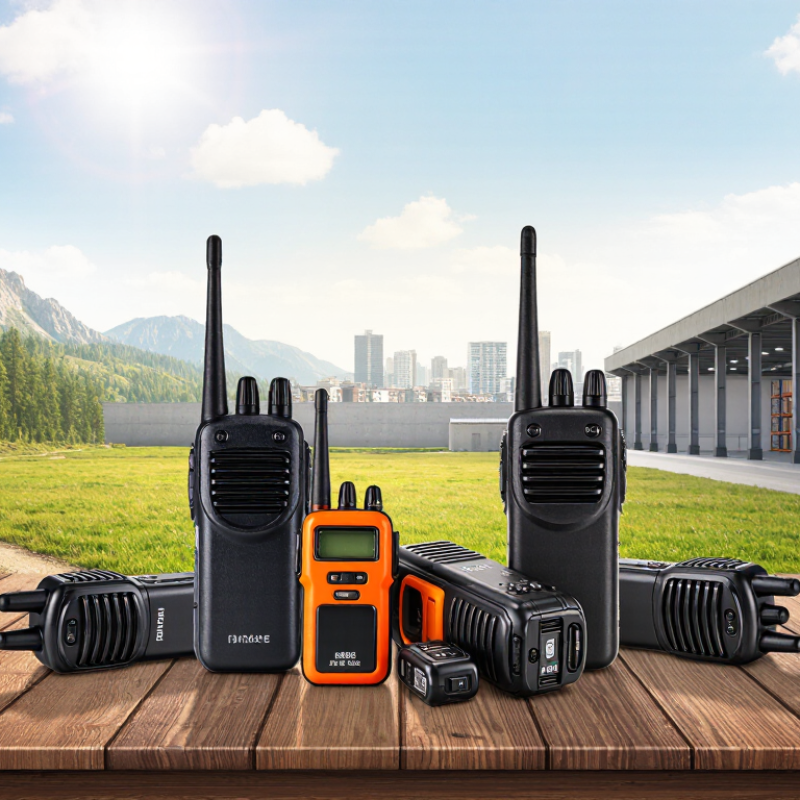
Walkie-talkie range is the distance over which two radios can exchange a clear, usable signal. It is not a fixed circle around each device. A stated range may come from open, unobstructed testing, with antennas high above the ground. Those conditions are very different from a wooded trail or a busy street.
Check whether a range figure is measured in miles or kilometers, and look for details about the test environment. A hilltop test can produce impressive results. In a neighborhood, walls, metal structures, hills, and other radio traffic may shorten the link. Even a person’s body can block a small handheld antenna when the radio is held poorly. Small details matter.
For a practical comparison, ask whether the advertised figure describes ideal line-of-sight communication or ordinary field use. If possible, test radios where you expect to use them: walk behind a building, descend a slope, or move indoors, then note where speech becomes unreliable. Keep the radios at normal speaking height. Record both the distance and the clarity of the message; a faint, broken signal is not useful range. Results can vary from day to day, so one test is not the whole story. It’s easy to overread a number.

A walkie-talkie’s advertised range cannot account for every route. A ridge, concrete wall, or stand of trees can interrupt the signal path. ITU-R Recommendation P.526-15 analyzes signal loss from diffraction around obstacles, while P.833-10 models vegetation loss by factors including foliage depth and frequency. There is no single dependable “trees reduce range by X” figure. A standard radio-horizon estimate puts 10-metre and 1.5-metre antennas at roughly 18 kilometres apart under ideal assumptions. That is a horizon estimate, not a promise of usable communication; buildings, terrain, and radio performance can sharply reduce it.
Tip: Walk the actual route before choosing equipment. Test from behind a hill, inside a vehicle, and near the building where you’ll work. Note where speech breaks up. Then try a higher, open position; even moving a few metres can clear an obstruction. Keep a simple map of dead spots. It helps, though it won’t capture every change in weather or foliage.
Dense, wet leaves can make a wooded trail less forgiving than an open field. Metal-sided structures and basement walls can also block or reflect signals. Check both directions, since one person’s clear reception does not guarantee the other person’s. A map can still mislead: small ridges and indoor walls may be missing. Choose range based on tested conditions, not the best-case number on a package.
Frequency shapes coverage. VHF signals can travel well over open ground, while UHF often handles built-up areas better. Neither guarantees a fixed distance. Buildings, hills, wet foliage, and antenna height can change reception within a short walk. ITU-R Recommendation P.1546-6 provides terrestrial propagation methods across 30 MHz to 4,000 MHz, underscoring why frequency alone cannot predict usable range. Terrain matters. A range chart can look convincing; it is easy to trust it too much.
Power matters, but legal limits depend on radio service and location. In the United States, FCC 47 CFR §95.567 limits Family Radio Service output to 2 watts ERP on some channels and 0.5 watts ERP on others. More power does not erase hills or improve a poor antenna. Check the rules for your country and service before buying, and compare radios operating on the same permitted service. Not just watts. For a practical test, try the radios from a doorway, then from behind a concrete wall; note where speech becomes unclear. I would record both clear-speech distance and battery use, because a longer advertised range may not help during a full day outdoors.
| Tip | What to Compare | Useful Facts and Benchmarks | How It Affects Your Choice |
|---|---|---|---|
| Tip 1 | Define the terrain | Radio range depends heavily on line of sight, antenna height, buildings, vegetation, hills, and interference. A manufacturer’s maximum-range figure is not a guaranteed working distance. | Describe the route you need to cover—open land, dense woods, or built-up areas—and look for realistic performance information in similar conditions. |
| Tip 2 | Compare frequency bands | VHF signals are commonly suited to open areas with fewer obstructions. UHF is commonly used where signals must work around buildings and other urban obstacles. Neither band guarantees longer range in every setting. | Choose for your surroundings, not frequency alone. Antenna design, terrain, and the radio service’s rules also matter. |
| Tip 3 | Check the radio service | In the United States, FRS uses designated UHF channels; GMRS also uses designated UHF channels; MURS uses five VHF channels near 151 and 154 MHz. Commercial and amateur radios use frequencies authorized for those services. | Confirm that both radios can legally communicate on the same authorized channels. A radio’s ability to tune to a frequency does not mean its use there is permitted. |
| Tip 4 | Compare permitted power | U.S. FRS is limited to 2 W ERP on channels 1–7 and 15–22, and 0.5 W ERP on channels 8–14. GMRS permits up to 50 W transmitter power on specified channels, with lower limits for certain channels. MURS is limited to 2 W transmitter power. | More power can help, but only within the applicable service rules. ERP and transmitter output power are different measurements, so compare like with like. |
| Tip 5 | Think beyond wattage | In ideal free-space conditions, quadrupling transmitted power produces only about twice the distance. Real-world obstacles and antenna performance can change results substantially. | Consider antenna placement, receiver sensitivity, and a clear line of sight as well as power. Use only antennas and configurations allowed for the radio service. |
| Tip 6 | Plan for interference | Other users, electrical equipment, and crowded channels can make communication unreliable. Privacy codes or tone squelch can reduce unwanted audio, but they do not make a channel private or extend its radio range. | Choose equipment with practical channel options and test it at the places and times you expect to use it. |
| Tip 7 | Verify licensing and local rules | In the U.S., FRS and MURS generally do not require an individual operating license; GMRS requires a license. Amateur and many commercial radio operations require appropriate authorization. Rules vary by country. | Before buying or transmitting, check current local regulations, permitted power, antenna restrictions, and licensing requirements for the exact radio service. |
Note: The legal examples above are for the United States and are general guidance, not a substitute for checking current regulations. Actual communication range varies with equipment, terrain, installation, and local radio conditions.
Tip 1: Inspect the antenna before comparing advertised range. A longer, well-positioned antenna can improve reception, but only when it suits the radio and stays upright. Tip 2: Treat maximum-range figures as best-case estimates. Open fields differ sharply from wooded trails, concrete buildings, or a valley between users. Terrain changes everything. Tip 3: Check whether the radio’s power and channel options fit your intended use, and compare specifications carefully.
Tip 4: Look at battery capacity and realistic operating time, not just the largest number on the box. Frequent transmitting, cold weather, and scanning can drain a charge sooner. Tip 5: Choose a model with a practical charging option, such as a spare battery or a charging base. A low-battery warning is useful, though it may not leave much time to react. Small details matter.
Tip 6: Consider features that help in real conditions: a clear display, simple controls, and a strong clip for carrying the radio on a pack strap. Tip 7: Test the pair in the places you expect to use them, with one person moving around a corner or behind a stand of trees. Record where speech becomes unclear. It is easy to overvalue extra features; clear audio and dependable battery life usually matter more.
Range claims need context. A radio tested across an open field may perform very differently between buildings or behind a wooded ridge. ITU-R Recommendation P.1411, “Propagation Data and Prediction Methods for the Planning of Short-Range Outdoor Radiocommunication Systems,” covers frequencies from 300 MHz to 100 GHz and models paths by environment.
That matters: a single advertised distance cannot describe every route. Treat the number as a best-case reference, not a promise.
Read reviews that explain where and how people tested, not just whether they liked the device. Look for details such as terrain, antenna height, obstacles, and whether speech stayed clear. Then test candidates on the route you actually use.
Walk from a parking area into a stairwell, or place one radio behind a closed door while another stays outside. Record the distance and note where voices break up. Test it yourself. Keep the radios at normal carrying height; a test with one held overhead may flatter the result.
Reviews can also be inconsistent, and my own small test would not settle the question. Compare several reports, repeat your route, and favor reliable communication over the biggest number.