How to Choose Child Resistant Zipper Pouches?
A Child Resistant Zipper Pouch can add a useful layer of protection, but choosing one takes more than checking its label. Consider who will handle the pouch, what it will hold, and where it will be stored. The closure should feel secure when shut, yet remain manageable for the intended adult user. A pouch that is difficult to open may frustrate caregivers and invite rushed handling. Small details matter.
Compare the zipper design, pouch material, dimensions, and instructions from the manufacturer. Look for clear guidance on closing and checking the seal. Press along the zipper after use, and inspect the pouch for tears, weak seams, or worn closures. A practical test is to handle a sample with dry hands, then repeat with the pouch filled to its expected capacity. Does it close evenly? Can you tell when it is fully shut? These checks cannot replace product testing, but they can reveal everyday usability problems.
Child-resistant does not mean childproof. No pouch should be treated as a substitute for careful storage, supervision, or keeping items out of children’s reach. That point is easy to overlook. Review product specifications, request relevant test information from the supplier, and avoid relying on appearance alone. The best choice balances a dependable closure with durable construction and clear instructions. It may not be perfect for every household, so consider how it will be used before ordering in bulk. A few minutes of comparison can prevent an inconvenient—and potentially unsafe—fit.
Understand How Child-Resistant Zipper Pouches Work
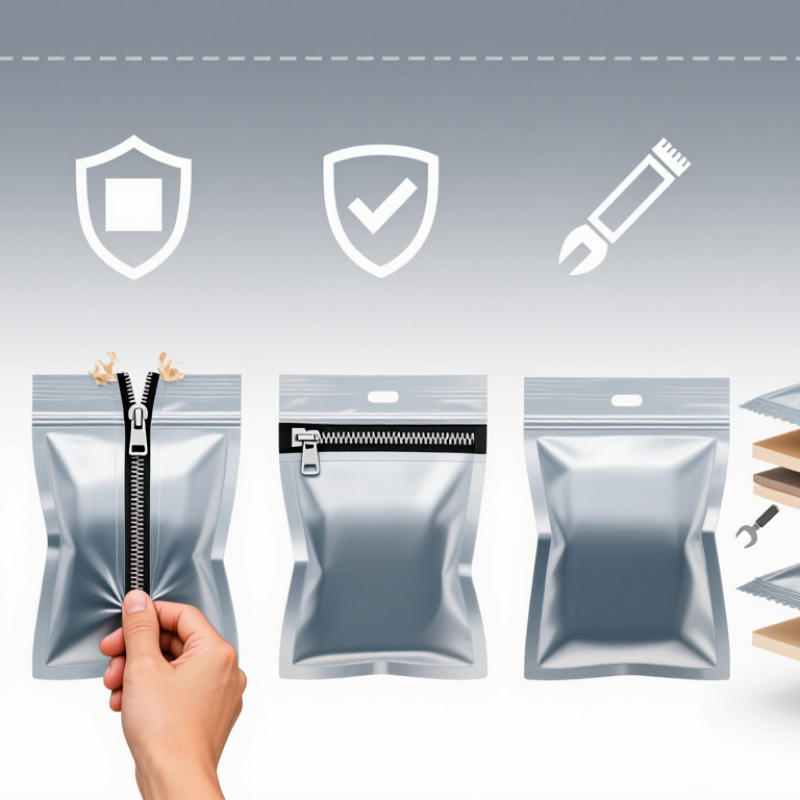
Child-resistant Zipper Pouches use closures that require more than a simple pull. Depending on the design, you may need to press marked areas while sliding the zipper, or squeeze tabs before opening. The tracks resist casual tugging until these actions happen together. It is a coordination task, not a lock. Not quite foolproof.
Follow the pouch’s opening directions, then close it by running your fingers along the full zipper track. A small gap at one corner can leave the closure incomplete, even when the pouch looks shut. Check that the track feels evenly engaged. If the zipper is loose or damaged, replace the pouch rather than forcing it.
Child-resistant packaging is designed to make access more difficult, not impossible. Children’s abilities vary, and some may learn how a closure works. Keep pouches out of reach, and do not rely on the zipper alone. That caveat is easy to overlook. It deserves attention. Designs differ, too, so a familiar motion may not work on a new pouch; check its instructions before use.
Identify the Product and Packaging Requirements
How to Choose Child Resistant Zipper Pouches?
Identify the Product and Packaging Requirements
Start with the product itself. Is it a dry granular material, a gel, or a set of small pieces? Note its weight, texture, moisture sensitivity, and how often the pouch will be opened. A fine powder may escape through a weak seal; sharp-edged pieces can stress corners during shipping. Measure the filled pouch, not just the empty one. It is easy to overlook how much the contents change the seal’s performance.
Then define who needs to open and reclose the package, and what conditions it must withstand. The U.S. Consumer Product Safety Commission’s child-resistant packaging protocol, 16 CFR 1700.20, uses panels of 200 children aged 42–51 months and 100 adults aged 50–70. These controlled tests show why appearance alone cannot establish child resistance. Ask a qualified packaging supplier about testing the finished pouch with its intended contents and closure. Check reclosure, seal integrity, and legibility after handling. A sturdy zipper is not proof. That assumption can fail. Requirements also vary by product and market, so confirm applicable standards before ordering.
How to Choose Child-Resistant Zipper Pouches: Identify Product and Packaging Requirements
U.S. child-resistant packaging effectiveness benchmarks provide a useful starting point when evaluating pouch designs.
How to use this: Identify the product’s contents, form, and applicable regulations first. Then confirm the pouch’s closure, reclosability, and material are suitable, and have the complete package tested under the relevant protocol. Requirements can vary by product and jurisdiction.
Check Safety Standards and Testing Certifications
When choosing child-resistant zipper pouches, check the safety standard named in the supplier’s test report. Requirements vary by market and intended product, so a generic “child-resistant” claim is not enough. Ask whether the exact pouch design was tested, including its zipper, opening instructions, and any required resealing feature. Small design changes can affect performance.
Tips: Request the test date, laboratory details, and report scope. Confirm the report matches the pouch size and material you plan to order. Check whether testing followed an applicable, current standard. A certificate alone may not show what was tested.
Look for reports from a qualified independent laboratory, and ask how production batches are checked for consistency. Review clear instructions and inspect a sample: the zipper should close fully, and the opening method should be understandable to adults. Testing can support a safety claim, but it cannot replace careful use and storage. I would also ask what happens if a pouch fails inspection; suppliers do not always explain this clearly.
Compare Pouch Materials, Closures, and Sizes
How to Choose Child Resistant Zipper Pouches?
Compare Pouch Materials, Closures, and Sizes
Material affects durability, feel, and product protection. A laminated pouch can help limit moisture and odors, while a simpler film may suit dry goods. Check the pouch’s stated barrier properties instead of judging by thickness alone. Some thick films still tear at the seams. That detail is easy to miss.
Closures need careful comparison. Child-resistant zippers may require a specific pinch-and-slide motion, so test samples with the intended users and follow the supplier’s instructions. “Child-resistant” does not mean childproof. Look for documented testing and clear opening directions. Size matters, too: choose a pouch that fits the contents without forcing the zipper or leaving excessive empty space. Measure the product, then allow room for a smooth seal.
Tips: Try opening and closing a sample several times. Check whether the zipper tracks align and the seal closes fully. Store filled pouches out of children’s reach; packaging alone is not a substitute for safe storage. I would also reconsider the size after a real filling test, since estimates can be wrong.
Evaluate Usability, Quality, and Supplier Reliability
A child-resistant zipper pouch should be easy for an adult to open, close, and use repeatedly. Check the zipper track for smooth movement, then inspect whether the press-to-close seal engages evenly across the pouch. Ask for usability testing, not just a product sample. The U.S. Consumer Product Safety Commission’s child-resistant packaging test protocol uses panels of 200 children and 100 adults, highlighting why both child resistance and adult access need evaluation. Small details matter.
Quality depends on more than film thickness. Request specifications for material layers, seal strength, zipper performance, and print durability. Ask the supplier for recent inspection records, defect rates, and corrective-action examples. ISO 8317:2015 provides testing requirements for reclosable child-resistant packaging; ask whether the pouch design has been independently assessed against an applicable standard. A certificate alone may not cover every size or material variation. Verify the tested configuration.
Supplier reliability shows up in the details: traceable batch records, clear lead-time commitments, and advance notice of material changes. Request a sample from a normal production run, not only a hand-finished prototype. Compare its zipper alignment and seals with the approved specification. Ask for evidence. I would also check how quickly the supplier answers a technical question; it is a useful signal, though not proof of consistent quality.