SUMMER LIMITED EDITION VAPES NOW AVAILABLE


How to Choose the Right Magnetic Snap for Your Products
A magnetic snap may look like a small detail, but its pull can shape how a bag closes, how a flap sits, and how a customer uses the product every day. Choose too weak a snap, and the closure may open under a light load. Choose too strong a one, and thin leather or fabric can crease around the hardware. The right choice depends on more than magnet strength.
The U.S. Geological Survey’s Mineral Commodity Summaries tracks rare-earth production, including materials used in some permanent magnets. It offers useful context for sourcing, but it does not provide a direct performance standard for magnetic snaps. For product selection, test the snap in the finished material. Check closure force, alignment, coating, thickness, and repeated opening. A sample that feels secure on a workbench may behave differently inside a lined handbag. Small differences matter.
I can’t responsibly supply a named expert’s quotation without a verifiable source; inventing one would weaken the credibility of this guidance. A reliable selection process should compare measured performance with the product’s real use, then record what the tests reveal. Even a neat test can miss something. That is worth remembering.
Understanding Magnetic Snap Components and How They Work
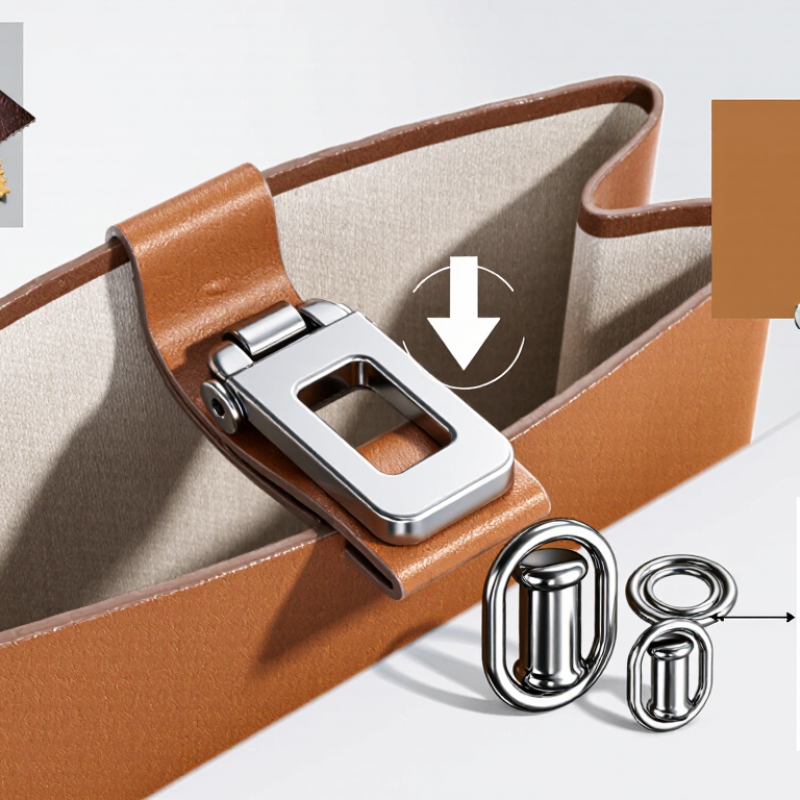
A magnetic snap usually has two matching halves: one holds a magnet, while the other contains a steel plate or a second magnet. Each half may include a decorative cap, a backing plate, and prongs or posts that secure it to the material. When the halves meet, magnetic attraction pulls them into alignment and keeps a flap closed.
The parts must work with the product’s construction. For example, a thick leather flap can create a wider gap between the magnet and its counterpart, reducing the closing force. A thin lining may also shift or wrinkle around the backing plate if the fitting is too large. Check the closure on the actual material stack, not just on a bare sample. Small details matter.
Closing strength depends on magnet size, spacing, and the surrounding hardware. A stronger pull is not always better; it can make a small pouch awkward to open or strain soft fabric. Test repeated opening, hand feel, and alignment before settling on a component. The first sample may look neat but feel stiff in use. That is worth reconsidering. Also inspect the back of the snap: smooth, secure edges help prevent rubbing against lining or contents.
| Component or Selection Factor | What It Does | Common Options or Characteristics | How to Choose |
|---|---|---|---|
| Magnet | Creates the attractive force that brings the two sides of the closure together. | Often a permanent magnet enclosed within a metal housing. Magnetic strength and dimensions vary by snap design. | Choose a design that holds the product closed during normal use while remaining easy for the intended user to open. Test it with the actual product materials and layers. |
| Keeper plate | Provides the magnetic target that is attracted to the magnet. It is commonly made from ferromagnetic metal. | Usually a flat metal plate or a shaped metal part paired with the magnet assembly. | Check that the keeper aligns with the magnet when the product is closed. Misalignment or added material between the parts can reduce the effective hold. |
| Cap and housing | Cover and support the magnetic or keeper components and provide the visible face of the snap. | Available in different shapes, finishes, and metal constructions; the exact arrangement depends on the product design. | Match the cap shape and finish to the product appearance. Confirm that the housing edges and profile are suitable for the material and intended contact area. |
| Mounting prongs, posts, or attachment parts | Secure the snap to the product material. Some designs use prongs that pass through the material and are folded over a backing part; other designs use different attachment methods. | Attachment style varies with snap construction, material thickness, and installation method. | Choose a mounting style compatible with the fabric, leather, or other substrate. Follow the hardware supplier’s installation instructions to avoid loose fitting or material damage. |
| Material thickness and layers | Affects how closely the magnet and keeper can meet and how securely the snap can be installed. | Products may include lining, padding, interfacing, or multiple material layers between the closure parts. | Measure the complete material stack at the attachment point. Test a sample using the finished construction, since extra spacing can weaken the magnetic connection. |
| Holding force and opening effort | Determines how well the closure resists accidental opening and how much effort is needed to separate it. | Holding performance depends on the snap design, alignment, spacing, and the materials around it. | Balance secure closure with convenient opening. Evaluate the snap through repeated opening and closing on a finished sample rather than relying on appearance alone. |
| Size and placement | Influence the closure’s appearance, alignment, and suitability for the product area. | Magnetic snaps are made in different sizes and profiles; size alone does not determine performance. | Allow enough space for installation and reinforcement where needed. Position the two sides so they meet naturally when the product is closed. |
| Product use and care | Exposes the snap to conditions such as frequent use, moisture, cleaning, or contact with nearby components. | Care requirements vary with the snap’s materials, finish, and the product construction. | Check corrosion resistance and care compatibility with the supplier. Test the assembled product under its expected use and cleaning conditions. |
| Final sample testing | Confirms that the selected snap works as intended in the complete product. | Testing can include alignment, opening effort, closure security, installation quality, and repeated operation. | Make and evaluate a finished sample before selecting hardware for production. Recheck performance if the material stack, placement, or snap design changes. |