How to Choose the Best Vape Batteries for Global Sourcing?
Choosing the right Vape Batteries for global sourcing requires more than comparing capacity and price. A battery may look reliable on a supplier’s website, yet fail during transport, storage, or repeated use. Buyers should examine cell chemistry, discharge performance, cycle life, insulation quality, and protection features. Small details matter. A damaged wrap can expose metal edges and create a serious safety concern.
Reliable sourcing begins with evidence. Request current test reports, safety data sheets, batch records, and clear product specifications. Check whether suppliers support relevant transport requirements, including UN 38.3 testing for lithium batteries. Depending on the destination market, additional standards and documentation may apply. Independent laboratory verification is stronger than a sales promise. Factory audits, sample testing, and traceable labeling also reduce uncertainty.
Price still matters, but the lowest quotation can hide weak quality control. A practical sourcing process compares total cost, including testing, packaging, insurance, returns, and compliance support. Communication deserves attention too. Can the supplier explain capacity tolerances clearly? Can they provide consistent samples across production batches? These questions often reveal more than a polished brochure.
No checklist is perfect. Even experienced buyers can overlook aging stock or changing regulations. That is why responsible sourcing uses written specifications, incoming inspections, and regular supplier reviews. This approach protects users, supports lawful international trade, and builds stronger commercial relationships. The best choice is not always the most powerful battery. It is the safest, most traceable, and most consistently documented option for the intended application.
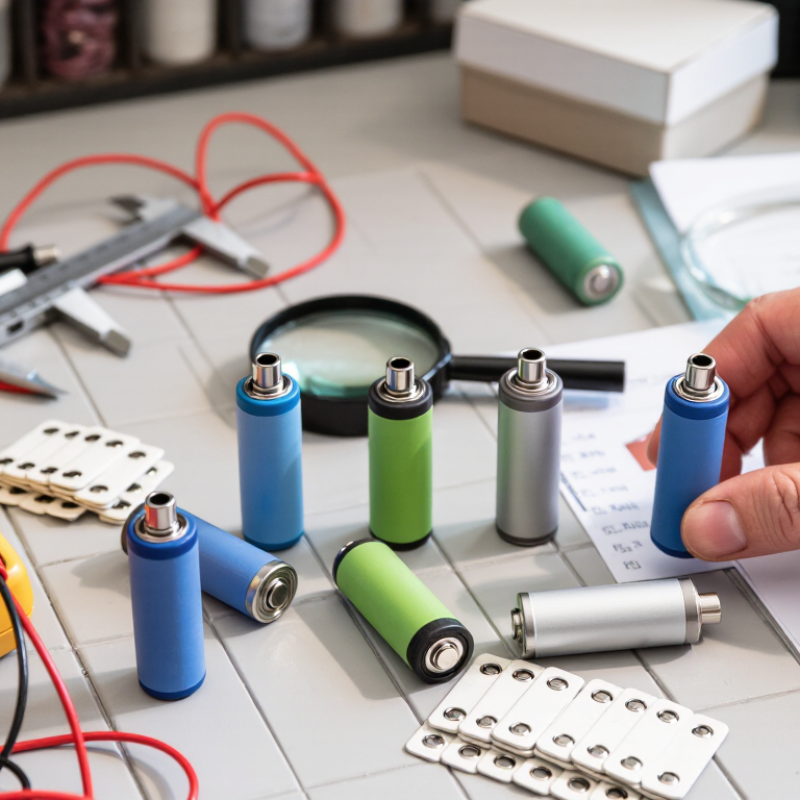
Define Vape Battery Types: 3.6–3.7 V Li-Ion Cells and Key Formats
For global sourcing, start with the battery’s chemistry, not its shape. Most vape devices use lithium-ion cells rated at 3.6–3.7 V nominal. This is the average working voltage, not the charging limit. A fully charged cell commonly reaches 4.2 V. That difference matters for device design, protection circuits, and testing.
Common formats include 18650, 20700, and 21700 cylindrical cells. The numbers indicate approximate dimensions: diameter and length in millimeters. A 21700 cell may offer more capacity, but it can also increase device size and weight. Pouch cells provide flexible shapes, yet they need careful mechanical protection. They are less forgiving when compressed or pierced. Choose the format only after checking the compartment, contacts, current demand, and thermal spacing.
Capacity, discharge rating, and cycle life should come from traceable test data. Do not rely on attractive labels alone. In sourcing work, I compare supplier specifications with independent laboratory reports and production samples. Documentation should cover quality systems, transport testing, and applicable safety standards, such as IEC 62133-2 and UN 38.3. Local rules still vary. A spreadsheet can mislead. Some ratings use different test methods, making direct comparisons imperfect. Ask for the test temperature, cutoff voltage, and measurement procedure. Then inspect samples for insulation, weld quality, and consistent dimensions. Small details become expensive problems.
How to Choose the Best Vape Batteries for Global Sourcing? - Define Vape Battery Types: 3.6–3.7 V Li-Ion Cells and Key Formats
| Cell Format | Typical Dimensions
(Diameter × Length) | Nominal Voltage | Full-Charge Voltage | Typical Capacity Range* | Typical Continuous Discharge Range* | Common Application Fit | Key Sourcing Considerations |
| 18350 | Approx. 18 × 35 mm | 3.6–3.7 V | 4.2 V | 700–1,200 mAh | 5–15 A | Compact, low-power vape devices | Small capacity and limited thermal headroom; verify device current limits carefully. |
| 18650 | Approx. 18 × 65 mm | 3.6–3.7 V | 4.2 V | 1,800–3,500 mAh | 5–35 A | Widely used regulated and replaceable-cell devices | Confirm whether the device requires flat-top or button-top terminals and protected or unprotected construction. |
| 20700 | Approx. 20 × 70 mm | 3.6–3.7 V | 4.2 V | 3,000–4,000 mAh | 15–35 A | Higher-output devices requiring more energy than many 18650 cells | Check battery-compartment clearance because the format is wider and longer than an 18650. |
| 21700 | Approx. 21 × 70 mm | 3.6–3.7 V | 4.2 V | 3,000–5,000 mAh | 10–45 A | High-power devices and longer-runtime designs | Usually offers a strong balance between capacity and current capability; confirm the manufacturer-rated test conditions. |
| 26650 | Approx. 26 × 65 mm | 3.6–3.7 V | 4.2 V | 3,000–5,500 mAh | 10–35 A | Large-format devices prioritizing runtime | Greater diameter can restrict compatibility; verify holder, contact pressure, and thermal design. |
| Li-Ion Pouch Cell | Custom; varies by design | Typically 3.6–3.7 V | Typically 4.2 V | Custom; commonly 300–5,000+ mAh | Application-specific | Integrated rechargeable vape devices with limited internal space | Requires protection circuitry, mechanical reinforcement, insulation, and validated thermal management. |
Global Sourcing Data Checklist
- Request the nominal voltage, maximum charging voltage, rated capacity, and continuous discharge rating on the technical datasheet.
- Verify capacity and discharge performance using a documented test method; do not rely only on marketing claims.
- Confirm cell dimensions, terminal design, protection configuration, cycle-life conditions, and operating-temperature limits.
- For international shipping, obtain the applicable transport test summary and safety documentation for the exact cell configuration.
- Use a suitable protection circuit or battery-management system where required; never exceed the device or cell manufacturer's current and charging limits.
*Capacity and discharge figures are typical market ranges for comparable cylindrical or pouch Li-ion cells. Actual values vary by cell chemistry, construction, operating temperature, test protocol, and supplier specification.
Compare 18650 and 21700 Cells by Capacity, Size, and Discharge Rating
For global sourcing, compare 18650 and 21700 cells by usable capacity, physical size, and discharge rating. An 18650 cell measures about 18 x 65 mm. Its typical capacity ranges from 2,500 to 3,500 mAh. A 21700 cell measures about 21 x 70 mm and commonly delivers 4,000 to 5,000 mAh. These figures reflect ranges reported in recent cylindrical-cell market reviews from Benchmark Mineral Intelligence and the International Energy Agency.
The larger 21700 format can provide longer operating time, but it needs more internal space. Its higher capacity does not automatically mean safer or better performance. Continuous discharge ratings often range from 10A to 35A, depending on cell chemistry, temperature, and testing method. IEC 61960-3 requires controlled capacity testing, while real devices may create different results. Numbers still mislead. Supplier datasheets should show continuous, not only pulse, discharge ratings. Ask for batch test records, impedance results, and transport documentation. A 21700 cell may reduce the number of parallel cells, yet increase enclosure costs and shipping weight.
Tips: Measure the battery bay before ordering samples. Check the protection circuit and connector design. Compare capacity at the same discharge current. Avoid judging cells by capacity alone. I would also test samples after thermal cycling, because laboratory ratings can feel optimistic in daily use. Confirm that every shipment follows applicable battery transport and safety rules.
Evaluate CDR, Pulse Current, Internal Resistance, and Thermal Limits
How to Choose the Best Vape Batteries for Global Sourcing?
Choosing a battery starts with continuous discharge rating, or CDR. This figure reflects the current a cell can deliver safely during sustained use. Do not select cells by pulse current alone. Pulse ratings may describe brief laboratory conditions, not repeated real-world cycles. Ask suppliers for independent test reports, production dates, and clear testing temperatures.
Internal resistance deserves close attention. Lower resistance usually means less voltage sag and less heat under load. However, readings can vary with temperature, equipment, and measurement method. Request testing at a stated temperature, such as 25°C. Compare matched samples from different production lots. A clean spreadsheet helps, but it can still hide inconsistent cells.
Thermal limits are practical safety boundaries. Review maximum surface temperature, charging temperature, and protection-system response. During evaluation, use calibrated equipment and record temperature rise over repeated cycles. A battery that performs well once may behave differently after aging. Include transport rules, labeling requirements, and regional conformity documents in the sourcing review. Experience suggests that traceability matters as much as capacity. Keep lot numbers, inspection images, and supplier declarations together. Some suppliers may provide impressive figures without enough supporting evidence. That is a warning worth investigating.
How to Choose the Best Vape Batteries for Global Sourcing?
Representative screening data for cylindrical lithium-ion cells: compare continuous discharge rating, pulse current, internal resistance, and recommended thermal operating limit.
Continuous Discharge Rating (CDR)
Short-Duration Pulse Current
Internal Resistance at 25°C
Recommended Maximum Operating Temperature
The values are representative engineering figures for generic cell classes, not brand specifications. CDR is the key sustained-load metric; pulse current applies only for a short, controlled duration and is not standardized across suppliers. Lower internal resistance generally reduces voltage sag and heat generation. For sourcing, confirm the supplier’s test method, cell temperature, cycle-life target, protection design, and maximum operating temperature in the latest datasheet.
Verify IEC 62133-2, UN 38.3, RoHS, and CE Compliance Before Import
Choosing vape batteries for global sourcing requires more than comparing capacity and price. Ask suppliers for current test reports and traceable production records. IEC 62133-2 confirms rechargeable cell safety under specified conditions. Check that the report matches the exact cell model, chemistry, and configuration.
UN 38.3 documentation is essential for lithium battery transport. Review the test summary, including altitude simulation, vibration, shock, overcharge, and forced discharge results. RoHS evidence should confirm restricted-substance limits through laboratory testing. CE compliance also needs careful review. The battery, charger, and finished device may require different technical documentation. A CE mark alone proves little without an EU Declaration of Conformity and supporting records.
Tips: Compare the report number, issue date, factory name, and model code across every document. Request samples from the same production line. Inspect insulation, terminals, labels, and packaging before placing a bulk order. Certificates can look convincing but still contain outdated information. Do not rely on copied PDFs. An independent laboratory review may cost more, yet it can expose missing tests or inconsistent ratings. Recheck compliance when the supplier changes materials, cell design, or assembly location. Small details matter.
Build a Global Sourcing Checklist for MOQ, Traceability, Testing, and Cost
How to Choose the Best Vape Batteries for Global Sourcing?
A reliable sourcing checklist starts with MOQ, not price. Confirm the minimum order quantity for each cell type, capacity, and packaging option. Ask whether the supplier accepts pilot orders for market testing. A smaller trial can reveal defects before inventory grows. I have seen low MOQs hide higher unit costs. That trade-off deserves careful review.
Traceability should reach the production line. Request batch numbers, production dates, cell specifications, and shipment records. Each carton should match its documentation. Keep samples from every approved batch. Testing must cover capacity, voltage consistency, temperature performance, short-circuit protection, and abuse resistance. Use an independent laboratory where practical. Supplier reports help, but they are not enough. Test reports can also expire.
Cost calculations should include freight, protective packaging, inspections, insurance, taxes, and rejected units. Compare total landed cost, not the quoted battery price. Confirm compliance documents for every destination market. Requirements may differ between regions. A supplier with clear records is usually easier to audit and support. Still, no checklist is perfect. Battery performance may change after storage or transport. I would leave room for retesting, especially after a design change. Safety margins cost money. They may prevent a much larger loss.