SUMMER LIMITED EDITION VAPES NOW AVAILABLE
Choosing a Main Door Lock is not just a matter of picking a sturdy-looking handle. The right choice depends on your door, frame, daily routine, and the people who use the entrance. A heavy deadbolt may feel reassuring, but it cannot compensate for a loose strike plate or a door that does not close squarely. Small details matter.
Security technologist Bruce Schneier wrote, “Security is a process, not a product.” His point applies to a Main Door Lock: a lock works as part of a larger setup, not as a complete answer by itself. Consider the lock’s construction, key control, installation, and upkeep. If you are comparing a keyed deadbolt with a smart lock, think about power, backup entry, and who needs access. Convenience counts, too. A lock that frustrates your household may not be used consistently.
This guide explains how to compare lock types, assess fit, and spot practical features before buying. Check your door’s thickness and material, then inspect the frame and existing hardware. Ask a qualified locksmith or installer when the fit is unclear. No single model suits every home. And labels can be confusing. It is easy to focus on a product’s security claims and overlook the door around it; that is worth a second look before making a decision.
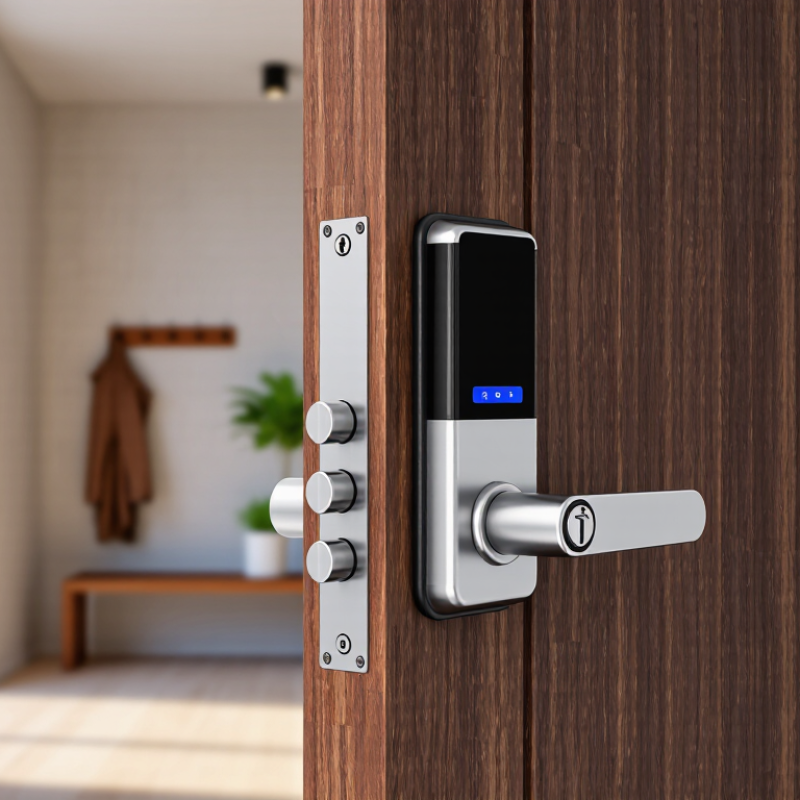
A main door lock should fit the door, not just look sturdy. Check whether the door is wood, metal, or partly glass, then note its thickness, opening direction, and existing holes. A deadbolt that suits a solid wooden door may not fit a narrow metal frame. Measure the backset, the distance from the door edge to the center of the handle or lock. Measure carefully. Also inspect the strike plate and frame; a strong lock can still be limited by a loose frame or short screws.
Think about how the entrance is used each day. Does it face a sheltered hallway or rain and blowing dust? Do several household members need keys, or would a keypad reduce key-handling? Choose a lock rated for exterior use when exposed to weather, and verify that its dimensions match the door before buying. For glass panels near the handle, consider whether the layout creates a reach-through concern, and ask a qualified installer about suitable options. Small details matter. It is easy to focus on the lock’s advertised strength and overlook the surrounding door. A careful fit and a sound frame both deserve attention.

Identify your door type and check its thickness before choosing a lock.
These are common nominal door thicknesses, not universal measurements. Measure your door and confirm that the lock’s stated thickness range, backset, and installation requirements match it.
Main door locks differ by how they secure the door. A spring latch retracts when its handle turns, so a deadbolt adds a separate bolt that extends into the frame. A keyed deadbolt uses a key cylinder; a keypad model moves the bolt through an electronic actuator. Mortise locks place the mechanism inside a pocket cut into the door, often combining latch and deadbolt functions. Each design has trade-offs. Convenience is not strength.
ANSI/BHMA A156.2 assigns cylindrical locksets Grade 1, 2, or 3, with cycle tests of one million, 400,000, and 200,000 operations respectively. These figures measure tested operating endurance, not resistance to forced entry. That distinction matters.
When comparing options, check the lock’s tested grade, bolt throw, and whether the strike plate can be secured firmly to the door frame. A strong cylinder cannot compensate for a loose frame. Electronic models also depend on batteries and reliable access methods during an outage. I would not choose by keypad features alone; the hardware fit and door condition are easy to overlook, and sometimes they matter more.
A lock’s security rating is a useful starting point, not a guarantee. Check which independent standard was used and whether the rating covers the complete lock, not just its cylinder. A high grade may still disappoint if the door, frame, or strike plate is weak. Look for clear test details on resistance to picking, drilling, and force, where applicable. Exact tests differ by region, so read the label carefully.
Key control matters in busy homes. Ask how replacement keys are authorized and whether copies require proof of permission. Keep a record of who holds each key; a lost key can change the risk. Small details matter.
Then consider durability: rain, coastal air, dust, and frequent use can wear parts down. Check for corrosion-resistant finishes, solid-feeling components, and published cycle testing. A stiff key after a wet winter is a warning, though poor alignment could also be the cause.
The lock should turn smoothly from both sides without force. Check it twice. Installation quality matters too, and it is easy to overlook.
A lock can look suitable online and still fail to fit your door. Measure the door’s thickness, the existing borehole, and the distance from the edge to the lock’s center. Check whether the door swings inward or outward and which way the latch faces. Small details matter. If measurements are unclear, take a photo and ask a qualified installer before ordering.
Installation should not require forcing the latch or widening holes without checking the door’s construction. A poorly aligned strike plate can make a deadbolt stiff, even when the lock itself works correctly. Test the key and handle with the door open, then closed. Test it twice. I used to assume a tight fit meant better security; it can actually hide alignment problems that worsen with daily use.
For a smart lock, check how it connects and what happens when power or internet access is lost. A keypad may still work offline, while remote alerts usually need a network connection. Look for clear battery warnings, a backup entry method, and settings for temporary access codes. Auto-lock can be convenient, but it may lock someone out if the door is not fully closed. That detail is easy to overlook. Choose features you will actually use, and review access settings after sharing a code.
| Factor | What to Check | Common Measurements or Options | Why It Matters |
|---|---|---|---|
| Lock type and door preparation | Identify whether the door uses a standard bored deadbolt, a mortise lock, or a multipoint locking system. | Many keypad and retrofit smart locks are designed for a standard single-cylinder deadbolt. Mortise and multipoint systems usually require a specifically compatible lock. | A lock that does not match the existing mechanism may not fit or operate correctly. Check the product’s compatibility requirements before buying. |
| Door thickness | Measure the door’s thickness at the lock location and compare it with the lock’s supported range. | Many residential entry doors are around 1⅜–1¾ inches thick, but doors and lock products vary. | The lock’s mounting hardware and tailpiece must reach and align properly through the door. |
| Bore hole and backset | Measure the face bore, edge bore, and backset—the distance from the door edge to the center of the lock bore. | A common face-bore diameter is 2⅛ inches; common backsets are 2⅜ or 2¾ inches. Always verify the existing measurements and the lock’s specifications. | Matching the existing holes can simplify installation and avoid drilling or door modifications. |
| Door handing and swing | Check which side the hinges are on and whether the door swings inward or outward. Confirm that the lock supports the door configuration. | Some locks automatically detect handing; others need to be set up for a left- or right-handed door. | Incorrect handing or setup can affect keypad orientation, latch operation, or installation. |
| Installation and alignment | Check that the deadbolt moves freely and lines up with the strike plate. Review whether installation requires drilling, wiring, or changing the existing latch. | Many retrofit models replace the interior thumbturn while retaining the exterior key cylinder. A full-replacement model may replace both sides of the lock. | A poorly aligned bolt can bind, drain batteries faster on motorized locks, or prevent reliable locking. Follow the installation instructions and test the door while open before closing it. |
| Security rating and physical hardware | Look for independently tested and clearly stated ratings, such as applicable ANSI/BHMA performance grades. Check the deadbolt, strike plate, and included screws. | ANSI/BHMA grades indicate tested performance levels; Grade 1 is the highest grade in that grading system. Confirm which standard and lock components the rating covers. | A rating helps compare tested durability and performance, but no rating makes a door or lock impossible to defeat. Door-frame strength and correct installation also matter. |
| Smart access and connectivity | Choose the access methods you need, such as a keypad, phone app, physical key, auto-lock, or temporary user codes. Check whether remote access needs a hub or bridge. | Bluetooth generally works nearby; Wi-Fi or a compatible hub can enable remote functions. Supported features depend on the lock, network, and smart-home system. | Matching connectivity to your home setup avoids paying for features you cannot use. Review app permissions, account security, and update support. |
| Power and backup access | Check the battery type, low-battery alerts, expected replacement process, and available backup entry method. | Many battery-powered locks use replaceable batteries. Depending on the model, backup access may include a physical key or an external emergency power contact. | Knowing the backup method helps prevent lockouts if the batteries run low or the electronic features are unavailable. |
A main door lock’s price is only part of its cost. Include fitting, replacement parts, and any changes needed to the door. A sturdy mechanical deadbolt may cost less to maintain than an electronic model, but installation quality matters. A poorly aligned bolt can stick against the strike plate and wear faster.
Maintenance needs differ. Mechanical locks may need occasional cleaning and lubrication, following the maker’s instructions. Electronic locks also rely on batteries, which need checking and replacement. Keep a spare battery nearby if the lock allows external emergency power. It is easy to overlook this detail until the keypad goes dark.
Think about value over several years, not just the checkout price. A repairable lock with readily available parts can be a sensible choice, even if it costs more upfront. For a busy household, keyless entry may save time, though its extra features bring extra upkeep. Check that the lock suits your door’s thickness and existing holes before buying. That step is not exciting, and I have seen people skip it. A qualified locksmith can assess difficult fit or alignment issues and explain likely labor costs before work begins.