SUMMER LIMITED EDITION VAPES NOW AVAILABLE




Top 10 Best Car Cameras for Buyers in 2026
A good Car Camera should do more than capture a dramatic moment. It should read a license plate in fading light, keep recording through a bumpy commute, and save footage without confusing menus. Demand is growing: Grand View Research valued the global dash camera market at about $4.03 billion in 2023 and forecast continued growth through 2030. That estimate signals a crowded market, not a guarantee that every model is dependable.
Safety remains the bigger context. The National Highway Traffic Safety Administration reported 40,901 U.S. traffic fatalities in 2023. A camera cannot prevent every collision. Still, clear footage may help people review what happened after an incident. University of Wisconsin human-factors researcher John D. Lee’s work offers a useful reminder: “Recording a journey is not the same as making it safer.” Treat that as a buying principle, not a promise of protection.
This guide compares ten options for 2026, focusing on image quality, night performance, storage, installation, app usability, and value. We also consider practical details: whether a rear camera comes in the box, how neatly cables can be routed, and whether footage is easy to retrieve. No single model suits every driver. Some buyers need a discreet, simple unit; others want front-and-rear coverage and more control. Specs can look impressive on a product page, yet real-world reliability is harder to judge. That uncertainty deserves attention. The picks ahead aim to make the trade-offs clearer before you buy.
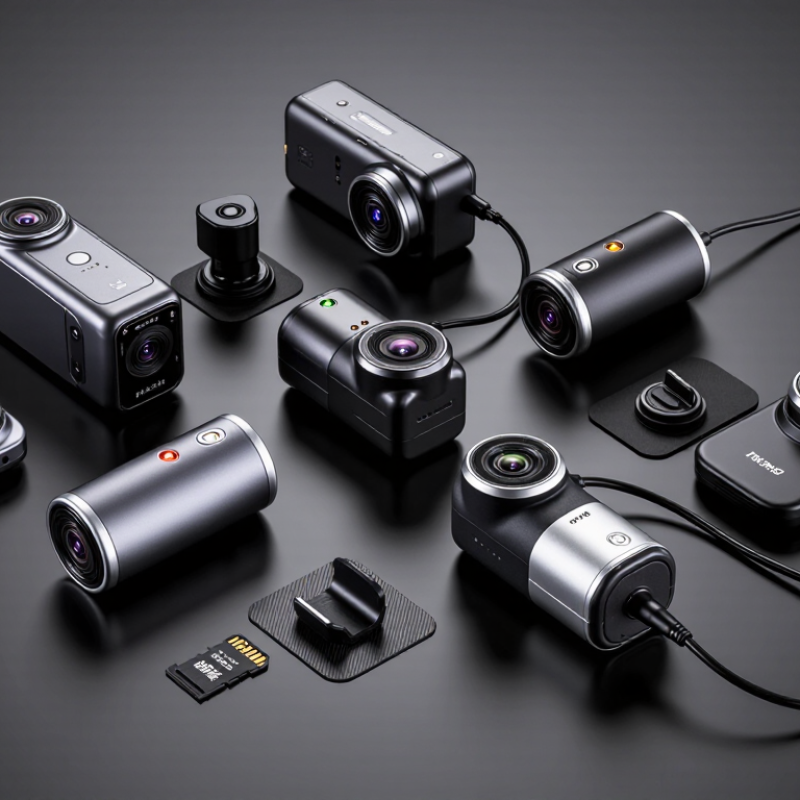
Understanding Car Cameras and Their Main Types
Car cameras are small recording devices mounted inside or around a vehicle. They capture the road, cabin, or area behind the car, depending on their design. A forward-facing camera records through the windshield and can document traffic ahead. It is often the simplest setup. That matters.
Dual-channel cameras pair a front unit with a rear camera, which may sit near the back window. This gives drivers footage from two directions, though installation can take more time. Some systems add cabin recording, useful for rideshare or family vehicles. A 360-degree system combines several cameras to create a view around the car. Wider coverage sounds ideal, but image quality and screen layout still matter.
Mirror-style cameras replace or overlay the usual rearview mirror with a live camera image. They can help when passengers or cargo block the rear window, but the display may feel unfamiliar at first. Parking modes record nearby movement while a vehicle is parked, if the camera and power setup support them. Check storage capacity, night footage, and mounting options before choosing. The labels can be confusing, and more cameras do not always mean clearer evidence.
Top 10 Best Car Cameras for Buyers in 2026 - Understanding Car Cameras and Their Main Types
| Camera Type | Typical Coverage | Common Resolution or View | Power and Recording | Best Suited For | Key Consideration |
|---|---|---|---|---|---|
| Front-facing dash camera | Road ahead through the windshield | Commonly 1080p, 1440p, or 4K | Usually powered from the vehicle’s 12-volt outlet or a hardwire kit; typically records to a memory card in looped clips | Drivers seeking a straightforward record of events in front of the vehicle | Higher resolution can capture more detail, but results also depend on the lens, lighting, windshield condition, and recording settings. |
| Front-and-rear dash camera | Forward road view plus a rear-facing view | Front and rear resolutions vary; rear channels are often lower resolution than the front | Typically uses a front unit and a wired rear camera; both views may be saved to one memory card | Drivers who want footage from both ends of the vehicle | Installation may require routing a cable to the rear window, and rear-window tint or obstructions can affect image quality. |
| Three-channel dash camera | Front road, cabin, and often rear road | Multiple video streams; resolution differs by channel | Usually records several views simultaneously to one storage device | Rideshare drivers, taxi operators, and drivers who need cabin footage | More channels use more storage and may require careful camera placement to avoid obstructing the driver’s view. |
| Infrared cabin camera | Vehicle interior, including in low-light conditions | Cabin-video resolution varies; infrared illumination can support recording in darkness | Commonly built into a multi-channel dash camera or connected as an additional camera | Recording passenger activity or monitoring a vehicle interior at night | Infrared helps illuminate the cabin but does not improve the camera’s view through a dark or obstructed window. |
| Mirror-mounted dash camera | Forward road view; some models also include a rear camera | Varies by model, commonly 1080p or higher for the front channel | Attaches over or replaces the existing rear-view mirror; may include a display and memory-card recording | Drivers who prefer a mirror-style display or want to combine a display with dash-camera recording | Check mirror fit, screen brightness, glare, and whether the rear camera is included or sold separately. |
| Backup camera | Area behind the vehicle, usually displayed when reverse is selected | Video quality and viewing angle vary; many systems show guide lines | Often activates with the reverse gear; may connect to a dashboard display or a mirror-mounted screen | Improving visibility while reversing and helping detect obstacles behind the vehicle | It supplements, rather than replaces, mirrors and direct observation; keep the lens clean and check the display’s field of view. |
| Wireless backup camera | Rear view transmitted to a compatible in-vehicle display | Image quality and viewing angle vary by system | Camera and display communicate wirelessly; the camera still needs a power source, often connected near the rear of the vehicle | Vehicles where running a video cable to the front display is difficult | Wireless links can be affected by interference, range, or installation conditions; confirm compatibility and reliable operation before use. |
| Surround-view camera system | Views from several exterior cameras combined into a top-down or multi-angle display | Displayed views are stitched from multiple cameras; image detail depends on the system | Usually integrated with the vehicle’s display and requires camera calibration | Low-speed parking and maneuvering in tight spaces | The overhead image is a processed composite, not a direct camera view; calibration and cleaning all lenses are important. |
| Integrated factory camera system | Coverage depends on the vehicle; may include front, rear, or surround views | Varies by vehicle and installed system | Built into the vehicle and commonly linked to its display, controls, or driver-assistance features | Buyers who prefer a vehicle-integrated installation and controls | Features differ between vehicles and trim levels; verify included views and whether footage can be recorded or exported. |
| Fleet or driver-monitoring camera system | May record the road, cabin, or both, depending on configuration | Resolution, number of channels, and recording settings vary | Often supports event-triggered recording, local storage, or connected fleet management features | Commercial vehicles and fleet operators with defined safety or incident-review needs | Review privacy, consent, data access, retention, and local legal requirements before installation. |
Note: These are camera categories, not a universal ranking. Features, image quality, compatibility, and recording options vary by vehicle and product; check the specifications and installation requirements for the exact system.